Saturday, 22 February 2020

Miler McGrath

"Here where I aim laid, I am not
Nor am I in both places, but I am in each
It is the Lord who judges me.
Let him who stands take care lest he fall"

The table top tomb of Miler McGrath lies within the walls of Cashel Cathedral at the Rock of Cashel.

For more on this controversial figure who was both a Catholic and Protestant Bishop and died at the age of 100 with nine children, see Seamus Kings brilliant lecture below.

https://www.seamusjking.com/sjk-articles/2017/3/7/miler-mcgrath-1522-1622-talk-given-to-cashel-historical-society-circa-1986

Saturday, 15 February 2020

Danes in Tipperary / Arra

Copyright - University of Wisconsion / Milwaukee 
The above is an extract from a map located here.

I have written about a similar map that Rev. John Gleeson used in both The History of Ely O'Carroll Territory and also Cashel of the Kings. It looks to me as if this map was the basis of both.

Those maps located "Danes" in what is now the half-barony of Arra or probably better known as the Burgess / Portroe / Ballina area in County Tipperary.

I have written about this map here & about possible Viking settlements on Lough Derg here.

Since Rev. Gleeson's extracts only covered the Tipperary area and seemed to only include prominent surname / clans in that area, it could have been possible that the "Danes" referred to the surname Dane or Dean even if that was not a well known name in that area. The 1901 and 1911 census actually record few of either name in the entire country at that time.

However this new map covers the whole of Ireland and if you see the extract above it also locates Danes at Limerick.
Other places on the larger map where it locates Danes includes Wexford, Waterford, Cork, Athlone, Lough Neagh, Belfast Lough, Strangford Lough, Dublin and Wicklow.

So I think this conclusively shows that it is referring to Danes or Vikings rather than a surname. I know that Brian Boru and his descendents based at Kincora would have been in close contact with the Danes but this location in Arra seems to be far enough way that isn't just a mistake for this location or a mapping error due to not having enough room to place it elsewhere.

I have yet to come across any primary references to Danes locating in this area although Gleeson does say the following

"The tribe land of O'Sextons lay along the coast of Lough Derg in the Shannon between Dromineer and Castlelough; it was contiquous to the tribe land of the O'Glissane (Gleeson), whose land lay between Castlelough and Killaloe on the Tipperary side of the lake. The Danes settled in the neighbourhood of the O'Sextons, which may explain the fact that the name is now extinct in North Tipperary, but is found in West Clare". 
From "The history of Ely O'Carroll Territory" by Rev. John Gleeson. Pg 52/53

On a local level I have come across a field name in the Castletown area known as The Danes 'Deans" but I don't have an extact location. That looks to be the next step in this research.

Sunday, 2 February 2020

The Tara Prince, the Egyptian Princess and other alleged links between Ireland and Egypt in ancient times


I think most of us have heard the stories that originate in the Lebor Gabala Erenn linking Scota or Scotia with Ireland.
https://en.wikipedia.org/wiki/Scota

It is a great story but the problem is when it used as fact.

I few years back I first heard of the claim relating to the Tara Prince and the faience beads that are claimed to originate in Egypt.

"The Tara Prince" aka Tara Boy

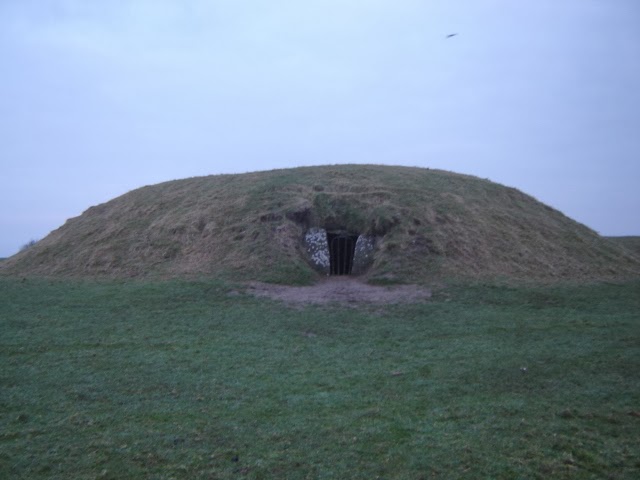
An excavation of the Mound of the Hostages in 1955 by Sean O'Riordain uncovered a number of items within the mound (which turned out to be a passage tomb). One was a set of faience beads now on display in the National Museum of Ireland.
They were associated with a skeleton that in pseudoarchaeology has been dubbed "The Tara Prince".

Copyright National Museum of Ireland

When I read about the claim linking him back to Egypt curiosity got to the better of me and I had to see if there was any basis in it. You can see where the claim arose in O'Riordain's paper "A Burial with Faience Beads at Tara" from 1956
https://doi.org/10.1017/S0079497X00017539

O'Riordain (pg 170) states:

"The faience beads have been submitted for examination to Dr J. F. S. Stone, who has kindly supplied the following report; 
'The four greenish-blue to blue faience beads from the Mound of the Hostages, Tara, are of considerable interest in view of their extreme rarity in Ireland in comparison with England. Only two other instances are known to me ; one of four segments from Dundrum Sandhills, Co. Down {Archaeologia, LXXXV, 1936, 251), and another of two segments found with a cremation at Ballyduff, Co. Wexford, sent to me by Mr P. J. Hartnett in 1952. ' The Tara beads are not made of true faience, which normally has an external coloured glaze, but of a well-known variety of the Eastern Mediterranean synthetic material in which powdered blue glass or glaze has been mixed with quartz grains and which, after moulding, has been fired. Such hard glassy faience, or variant E of the material, as has been described by A. Lucas (Ancient Egyptian Materials and Industries, 1948, 188), is well-known in Egypt, and has been found in the British Isles. It consists mainly of quartz grains which appear to be floating in a lake of glass, and numerous air bubbles are often present in the fabric. In the case of the Tara beads, the quartz grains are relatively large as compared with the finely powdered quartz used in the manufacture of the similar glassy faience Ballyduff specimen, and the fabric is somewhat porous. They compare very closely with the slightly smaller but similarly made necklace of six glassy faience beads found in 1938 with a cremation and plain food vessel at Long Ash Lane, Frampton, Dorset, and now in the Dorchester Museum (Antiquaries Journal, 31 (1951), 30). They compare favourably too in the large number of segments present, the maximum at Tara being 11, that from Frampton being 15. ' Although not quite so finely made as the Wiltshire examples of true faience, they nevertheless belong to the same variety having large perforations ; and though recalling the glassy faience fabric of some of the Scottish specimens they do not resemble them in having " crimped segments ". ' In the absence of any known evidence for local manufacture of this complex material in the early primitive societies of Europe, and in comparison with known examples in the British Isles, I would infer the burial to be of the Wessex Culture period and would date the beads c. 1400 B.C. by comparison with similar examples from Abydos, Egypt, and Tell Duweir in Palestine, both of that date. However, we cannot entirely exclude a possible Syrian origin, the fourth literate civilization known to have exploited the industry, and it would be wiser to refer to them as of Eastern Mediterranean origin. It remains for the future to prove the ultimate source. One thing is certain at present; spectographic analysis, or other forms of chemical analysis, would yield no results of value. Until some means is found to distinguish between powdered quartz from different sources, we must rely entirely on the morphological characters of the objects themselves.' J. F. S. STONE, 25-11-55. 

(My bolding above).

I'm not sure how Stone here can on the one hand state that "I would infer the burial to be of the Wessex Culture period" ie Wessex in England and then refer to them as of Eastern Mediterranean origin.

Later in the paper O'Riordain (pg 173) concludes similarly but again ignores Stones point relating to the Wessex culture:
"There are various possibilities as to place of manufacture, an Egyptian source being still preferred. There is also a spread of dating because of early and late associations. It appears in the present state of knowledge safe to refer to an Eastern Mediterranean origin (as does Dr Stone) and to accept the 14th century B.C. as the most likely date for these segmented beads.
However like all sciences conclusions change once more evidence becomes available." 

This is not an area that I am an expert in but I don't see how the conclusion fits the evidence here. The more likely conclusion being that the idea / method of manufacture travelled to Northern Europe rather the beads themselves.

In pseudoarchaeology the possible Eastern Mediterranean / Egyptian origin has been built upon that the person who was buried at Tara had to have brought the beads on his person with him from the Eastern Mediterranean / Egypt. When I read this I thought the far more likely possibility was that either the beads were traded via trade routes to Ireland or that the method of manufacture similarly followed these trade routes and they were manufactured locally.

More recent research and evidence has shown this to be the more likely conclusion.

A paper written by Alison Sheridan et al has this to say

The burial was redated with more advanced methods to
"Alex Bayliss for the present publication and the symposium that gave rise to it, has concluded that ‘Tara Boy’ is most likely to have been buried between 1700 and 1600 cal. BC (at 68.2% probability according to her model 14; cf. the 95.4% probability range of 1740–1535 cal. BC"

About the faience beads and their origins it states
"Faience beads are known from several find-spots in Ireland, with a strong easterly bias (Fig. 7, and see Williams et al. 1991–2, fig. 6). Overall, around 32 beads (including seventeen of segmented form) from sixteen find-spots are known, with the earliest example being a two-segment bead associated with cremated remains and a Vase Food Vessel from Ballyduff, Co. Wexford. The Ballyduff bones have been dated to 3550±50 BP (GrA14604, 2030–1750 cal. BC: Brindley 2007, 93). Brindley (2007, 313–15) has argued for two episodes of faience use in Ireland, with Ballyduff belonging to the first and dating from c. 1920–1800 BC, and the Tara beads belonging to a second—mostly associated with the use of Cordoned Urns—between c. 1720 and c. 1520 BC. Whether there had actually been two episodes is debatable, but the key observation to be made about the Tara beads is that, as with the other beads in the necklace, there is a strong link with contemporary practice in Wessex, where around half of all the 365+ Early Bronze Age faience beads from Britain and Ireland have been found, and an even higher percentage of the beads of segmented form (Sheridan and Shortland 2004,
figs. 21.4 and 21.7). There are grounds, however, for claiming that the Tara beads had not been made in Wessex but were probably made locally. The first of these is the fact that the segmentation has been effected by scoring rather than by the method used in Wessex, where a tube of faience was rolled against a former, like a butter pat in shape, to create segments and grooves of regular shape and depth (ibid., fig. 21.6). The second is that, unlike many of the Wessex beads, the Tara ones do not contain high levels of tin; and the possibility that arsenical copper had been used as a glaze colourant also sets them apart from British beads. It is therefore likely that the faience beads were made and added to the necklace in Ireland, but arguably as a way of enhancing the similarities with the composite necklaces that were fashionable in contemporary Wessex."
This is supported by the place of origin for the rest of the finds in the paper and can be read below. 

about O'Riordains conclusion the paper states

"It should be added that Ó Ríordáin’s (1955, 173) claim that the beads had been imported from the eastern Mediterranean around 1400 BC can safely be discounted, given our present understanding of the dating and spread of faience use (Sheridan and Shortland 2004)."

https://www.academia.edu/7798892/Tara_Boy_local_hero_or_international_man_of_mystery

Newton & Renfrew also looked at the spectrographic analysis carried out by the above Stone and also Thomas in their paper "British Faience Beads Reconsidered" (1970).

They say (pg 199)
"When Stone and Thomas considered the subject in great detail in their important and valuable paper ‘it was confidently expected, in view of earlier work, that clear trends in the composition of faience beads would be found which could be correlated with both source and date of manufacture’ (1956, 75). The hope was that spectrographic analyses of the British beads would allow a division into groups corre- lating with analysis of Egyptian and Mycenaean beads. In this way both a source and a date of manufacture might be ascribed to the British finds. This hope was not fulfilled and they were ‘therefore, somewhat reluctantly forced to the conclusion that the spectrographic technique does not confirm the promise of earlier in- vestigations’" 

They reexamined the finding and found that (pg 201)

"the Scottish beads contained greater quantities of the elements examined than did the Wessex beads, and those contained more than did the Egyptian beads""

It goes through various elements that are present in one but not in another for example (pg 201)

"Here we are mainly concerned with the differences between the Scottish and the Wessex beads, and all of these contain some tin (except Wessex bead No. 7 which does however contain tin in Table IV) and it is convenient to plot the Mg/Sn ratio against Al, as is shown in FIG. I. All the Scottish beads have a Mg/Sn ratio of 1-0 or more, whereas the beads found in England generally have ratios of less than 1.0, and the beads from the two geographical groups thus fall into two areas on the diagram which meet at the point Mg/Sn = 1.0; A1 = 4. Many of the Mediterranean beads contain no tin, and they have therefore been ignored in this visual presentation; only five of the Egyptian beads fall in either of these two areas of the diagram, and there is thus clear initial support for an hypothesis that the British beads did not come from Mediterranean sources. It is even easier to discriminate between the Scottish beads and any Mediterranean ones by adding the values (after transposition to our scale) for Mg + A1 + Sn + Ti, because none of the twelve Scottish samples (11 faience and I slag) has a value less than 10 (average = 12.7) and none of the 40 samples from any other region (except England) has a value larger than 9 (average = 6.8). The hypothesis thus gains support when titanium is added to the picture." 


It looks at the archaeological implications and states (pg 202)

"This separation of the Scottish, English and Mediterranean beads into groups, established above, does not of itself prove the local manufacture of the beads. But while the theory that all the beads were imported from the Mediterranean could still be upheld, it would require some very special pleading. Such pleading might be possible were there abundant evidence of Mycenaean or Egyptian influence on Bronze Age Britain, or even of evidence that beads with these compositions are to be found in the Mediterranean area." 

Scotia the Egyptian Princess

Scota and Gaythelos Scotichronicon, Corpus Christi College, Cambridge.  Image Wiki.
I'm no Egyptologist but I do know one and that is Andrea Sinclair. She has written a piece of the possibility of there being an Egyptian Princess named Scotia.

The main conclusion is as follows:

Egyptian Princesses were divine and were never married off to foreigners.

"But did you keep the word 'princess` in the back of your mind while reading this?  

Because what is essential to these romantic concoctions, is the misleading use of the word  to describe these women, which immediately delegates them to inferior status in the reader’s mind.  You know, as unmarried young women in a 19th century oil painting languishing around a palace on pillows shaking a sistrum, eating dates and waiting for a prince, only useful as tools for forming canny political alliances.

The ancient Egyptians simply did not work that way.


Egyptian princesses were considerably more important than that, queens even more so, they all held roles of high ritual importance. Try inserting queen of Egypt into every context where princess is used to sell this tosh and see how that changes the tone a lot.... great queen Meritaten - great queen Ankhesenamen.

Neither woman was an object to be fobbed off as reward for military prowess on some stranger from Scythia or Greece or even Tyre.  Meritaten and Ankhesenamen were chief queens and one of them was quite likely king of Egypt between 1335-1332 BCE.   

The only way you actually quit those jobs in Egypt was by dying. 

When a king died, if living, his chief wife became the dowager queen, a role as ritually important as chief queen.  You were responsible for running the country if the heir was underage, a semi-divine entity, a conduit for the goddesses, Hathor's earthly representative.  You couldn’t just run off to Spain with some guy in your dad’s army, a vassal governor, or your grandfather (urk)."
You can read about the flawed chronology and the flawed archaeology here.

https://artisticlicenseorwhyitrustnoone.blogspot.com/2019/09/scota-egyptian-princess-who-wasnt_24.html

The Barbary Ape

Barbary ape skull from Navan Fort (after Lynn 2003, p. 49) / irisharchaeology.ie

Sometimes the Barbary Ape found at Navan Fort is added into the mix. The ape skull has been dated to 390-320 BC.

http://irisharchaeology.ie/2014/05/a-barbary-ape-skull-from-navan-fort-co-armagh/

Edit: 

Another interesting part of the story is that of Scotia's Grave south of Tralee. 
The townland name it located in is Glanaskagheen or Gleann Scoithín. https://www.logainm.ie/en/1414581?s=Gleann+Scoith%c3%adn#

Rather than Scotia's Glen this actually translates as Glen of Wispy Flax or something similar. "Scoithín: A little wisp of hemp or flax ; a small lock of hair. (Dineen - Foclóir GB - 1904). (Thanks to Jim Hynes of the facebook group Irish Placename Research for that). 

For more on a visit I took to Scotia's Glen see here. Sadly there was no evidence for the hieroglyphics that are sometimes said to be carved there!  

Saturday, 18 January 2020

Hugh O'Donnell and his daring march in the Slieve Felims

Copyright www.duchas.ie used under CC-BY-NC 4.0 https://www.duchas.ie/en/cbes/4922083/4850640

"O'Donnell's army marched through Roscommon and Galway, reaching Cashel by 18 November. Mountjoy ordered Carew north to counter the Irish advance, but on 21 November O'Donnell sidestepped Carew's blocking force. Described as 'the greatest march that hath been heard of at this time of year', O'Donnell stole a night march on the lord president, crossing over the frozen Slieve Phelim Mountains." from pg 163 of "The Nine Years War 1593 - 1603" by James O'Neill. 

It is interesting how small events on a national scale, leave large imprints on a local scale. The daring night march that O'Donnell stole through the Slieve Felims in 1601 was still remembered in the schools folklore manuscripts of the 1930s featuring in Foilycleary and Kilcommon schools.  The teacher in Foilycleary (Ml. O Heachthigheirn) even drew a map of the likely route . If I recall there is a plaque in the area commemorating it as well.

https://www.duchas.ie/en/cbes/4922083/4850649

"When Red Hugh O'Donnell was camped at Holy Cross on his way to Kinsale in November 1601 to assist the Spaniards, he found himself surrounded by the forces of Carew and Mountjoy. A very great frost came on the night of the 13th of November and impassible bogs to the Slieve Felims became frozen hard. I know the country very well between Holy Cross and Croom, and I know the only great bog on the way is Cummer bog (shown on map at page 5).
There are other smaller bogs but none as large as Cummer. When these bogs became frozen hard that night it was possible for Red Hugh and his army to strike their camp and march away from their enemies. They did so, and in that very famous march they covered about 40 statute miles and camped at Croom next day. They must have followed (at least roughly) the line where is now the Anglesea Line as far as Réidh." 

https://www.duchas.ie/en/cbes/4922143/4856167/5015381

"When Hugh O'Donnell was proceeding to the Battle of Kinsale in 1599, his march was interupted at Loghbrack, because he could not cross the bogs with his heavy artillery. The bogs were too soft. That night it froze very heavily and early next morning Hugh crossed the frozen bogs safely & proceeded to Kinsale. Logbrach is about 2 miles south of Kilcommon."

https://www.irishtimes.com/news/in-quest-of-living-legends-1.328625

From the Irish Times 
"In the winter of 1601, Red Hugh O'Donnell's forces were confronted by an English army in Co Tipperary as they marched south to Kinsale. O'Donnell's men tramped 40 miles non-stop under cover of darkness across the frozen bogs of the Slieve Felim mountains to escape. A seasoned opponent on the English side, Sir George Carew described this without a grudge as "the greatest night-march in military history". Not only were the iron frosts of a mini-ice age on their side, but O'Donnell's men were bred for distance."


So we can see just now impressive this feat was. There was no road through this area until the 1800s when the Anglesey line was built through the area. I was reminded of reading this event a few years back by the recent Art O'Neill challenge (happening this weekend) which commenorates the escape by Art O'Neill, Henry O'Neill & Red Hugh O'Donnell in 1592 from Dublin Castle in the middle of winter when they treked to Glenmalure in Co. Wicklow.

https://www.historyireland.com/volume-23/the-art-oneill-challenge/

Perhaps Red Hugh learned something about travelling through frozen hills from this event but I'd imagine there were plenty of frozen nights up in Donegal for him too!

Edit

It was great to find a continuation of this folklore recorded near Croom in Co. Limerick between Croom and Manister in relation to a road known as "Bothar Ultach" or Road of the Ulstermen.

Milo Spillane writes about it in the North Munster Antiquarian Journal (2014, 156)

"However, help was at hand in a most unexpected and fortuitous manner. A frost of extraordinary severity set in during the night, which made firm ground of the impassable swamps. When told of this O'Donnell roused his sleeping forces and hastily set out, and under cover of darkness, travelled over the frozen bogs and through mountain valleys until they reached ground at Abington, County Limerick.... The bedraggled army reached the safety of Croom that day without any further interference or hindrance having travelled along what then became known as Bothar na nUltach"

http://www.limerickcity.ie/.../15%20bothar%20na%20nultach...

Looking at Google Maps - a March from Holycross to Croom is circa 40 miles / 60kms via the mountains. Doing that on a frozen night in November was some achievement and surely would be one of the great Irish legends if not for the disaster at Kinsale.


Sunday, 22 September 2019

Hag Stones, are they an example of authentic Irish folklore or a neo-pagan import?

By Darkone CC BY-SA 2.0
The first time I ever heard of Hag-stones was this year. They are more commonly known as Adder stones and described on wikipedia as follows:

"An adder stone is a type of stone, usually glassy, with a naturally occurring hole through it. Such stones have been discovered by archaeologists in both Britain and Egypt." 

In Britain they are also called hag stones,[1] witch stones, serpent's eggs, snake's eggs, or Glain Neidr in Wales, milpreve in Cornwall, adderstanes in the south of Scotland and Gloine nan Druidh ("Druids' glass" in Scottish Gaelic) in the north. In Germany they are called Hühnergötter ("chicken gods"). In Egypt they are called aggry or aggri.

Adder stones were believed to have magical powers such as protection against eye diseases or evil charms, preventing nightmares, curing whooping cough, the ability to see through fairy or witch disguises and traps if looked at through the middle of the stone, and recovery from snakebite. According to popular conception, a true adder stone will float in water.

Three traditions exist as to the origins of adder stones. One holds that the stones are the hardened saliva of large numbers of serpents massing together, the perforations being caused by their tongues. The second claims that an adder stone comes from the head of a serpent or is made by the sting of an adder. The third is more modern (and much easier to attain). It details that the stone can be any rock with a hole bored through the middle by water. Human intervention (i.e., direction of water or placement of the stone) is not allowed.[2]"
Increasingly I noted on the popular facebook group "Irish Stones" that they were being mentioned in an Irish context and out of curiosity I asked some of the people that mentioned them was there any written references to the them in Irish folklore. I'm from an inland part of Ireland and hag-stones you would imagine would be related to coastal folklore.
The main written reference in an irish context seems to come from a book by James Bonwick in 1894 titled 'Irish Druids and Old Irish Religions'. 
It states 
"In spite of the Lectures of the learned O'Curry, declaring the story to be "nothing but the most vague and general assertions," Irish tradition supports the opinion of Pliny that, as to magic, there were those in the British Isles "capable of instructing even the Persians themselves in these arts." But O'Curry admits that "the European Druidical system was but the offspring of the eastern augurs"; and the Tuaths came from the East. They wrote or repeated charms, as the Hawasjilars of Turkey still write Nushas. Adder-stones were used to repel evil spirits, not less than to cure diseases. One, writing in 1699, speaks of seeing a stone suspended from the neck of a child as a remedy for whooping-cough. Monuments ascribed to the Tuatha are to be seen near the Boyne, and at Drogheda, Dowth, Knowth, &c."
Bonwick was an Englishman living in Australia without first hand knowledge or experience of irish folklore. A very good indication of local folklore as it was recorded in the 1930s is on Duchas.ie. This online archive of the Irish Folklore Commissions schools manuscripts shows that there are no records of hag stones or adder stones. For a comparable example a search for the dobhar cu, a relatively obscure irish folklore story, gives 3 stories and 22 transcripts or the Goban Saor 201 stories and 175 transcripts. 
Other references to date seem to be from recent local oral folklore and possibly from the North-west of Ireland.
Ireland doesn't / didn't have any adders or snakes from which the name is likely to originate. There is a suggestion that a stone anchor or stone weight in Irish is known as a Cailleach, which is also the Irish for a witch or hag. However again turning to duchas.ie, there is no mention of stones with holes in them in the stories recorded relating to the Cailleach in the Schools Manuscripts that I can see.  
One concern that we should all have about Irish folklore is the introduction of imported concepts into the irish body of folklore. You can clearly see this with all the fairy doors and fairy walks that abound in the country. If you look at the whole folklore around fairies, they were not the kind of beings that you wanted your children to be hanging out with! 
I'm concerned that hag-stones in an irish context are similar, perhaps introduced in a neo-pagan context to explain the Irish name for a stone anchor. If it is authentic historic Irish folklore then it is of interest and it would be great if someone could do a proper study of its origins and distribution around the island.   

Sunday, 15 September 2019

The Black Pig's Bed at Lough Gur

Leaba na Muice or the Black Pig's Bed on the edge of Lough Gur in Limerick from the archives (circa 2006).

"Leaba na Muice" is supposed to have been the abode of a famous black pig which did considerable damage to all other animals - especially cows - in the neighbourhood. This famous animal was of considerable size and was fery ferocious and often "mangled" other animals much larger than herself.
Finally the people became exasperated and decided to take the offensive against this destructive animal. The "Clarion Call" went forth and the people armed with forks, knives and patches assembled on Cnoc Aine which would be about 4 miles from the abode of 
the Black Pig. The people were not sure where she had her headquarters as she was often seen miles away from "leaba na muice", and hence they decided to comb the whole district for her. They even knew of three other haunts where they expected she might be. One of those haunts was convenient to Cnoc Aine.
The farmers who assembled in Cnoc Aine on that morning numbered several hundreds. Then they marched northwards - in the direction of Lough Gur - in extended formations. They searched every thicket and wood carefully but no trace of this ferocious animal did they find till they came to "leaba na muice".
When the party reached "leaba na muice" the Black Pig sprang to life and emerged from under the larger flag 
which covered the "leaba". When she came out of the "leaba" 4 bonhams - young pigs - appeared with her. The old mother stood at bay for a while and displayed a fierce, angry countenance together with formidable "tusks" which for a while called a halt to the advance of the angry natives.
Then suddenly as if you instinct or by command, three of the four bonhams fled away towards the north while mother pig cried halt to the advancing human beings. The fourth bonham fled back into the "leaba" and remained there for some time and seeing the armed party pass by on the track of her mother and sisters she too took flight but not to the north but to the south.
When the pig thought that her young ones had got a good start and finding 
herself being surrounded on all sides and her retreat about to be cut off she too turned and fled towards the north and as she did so she looked back at her angry pursuers and without checking her speed she snarled at them in a fierce manner and said
"Woe to the people between Cork and Limerick". 

Note: I have vainly endeavoured to find out 
the exact meaning of this treat or if "woe" did befall them that lived in that "accursed quarter"
The young pigs kept together for sometime closely followed by their protecting mother. Then when some miles of the country had been traversed and all danger seemed past they all separated. One of the bonhams fled to Connaught, another of them into Leinster while the third continued its long and lonely trek into Ulster. It will be seen, therefore, that of the 4 bonhams, one went into each of the 4 provinces of the country.
As for the old "Mammy" she raced towards Limerick City. Then she faced north-east and continued her course almost parallel with the Shannon until she reached Sligo where she halted. On her course she kept to the valley as much as possible and headed for woods and coverts and any other objects which she 
thought would hide her.
Hence the course of this famous pig from Limerick to Sligo was - and is in some places still known as "The Valley of the Black Pig".
I am also informed that references to this episode is also to be found in Colm Coille's Prophesies."

https://www.duchas.ie/en/cbes/4922068/4849534/4954398

Thursday, 12 September 2019

Geoffrey de Marisco - The Man that built Nenagh Castle?


EDIT: I wrote this post based on secondary sources that had taken information by Hervey Morres as being accurate.

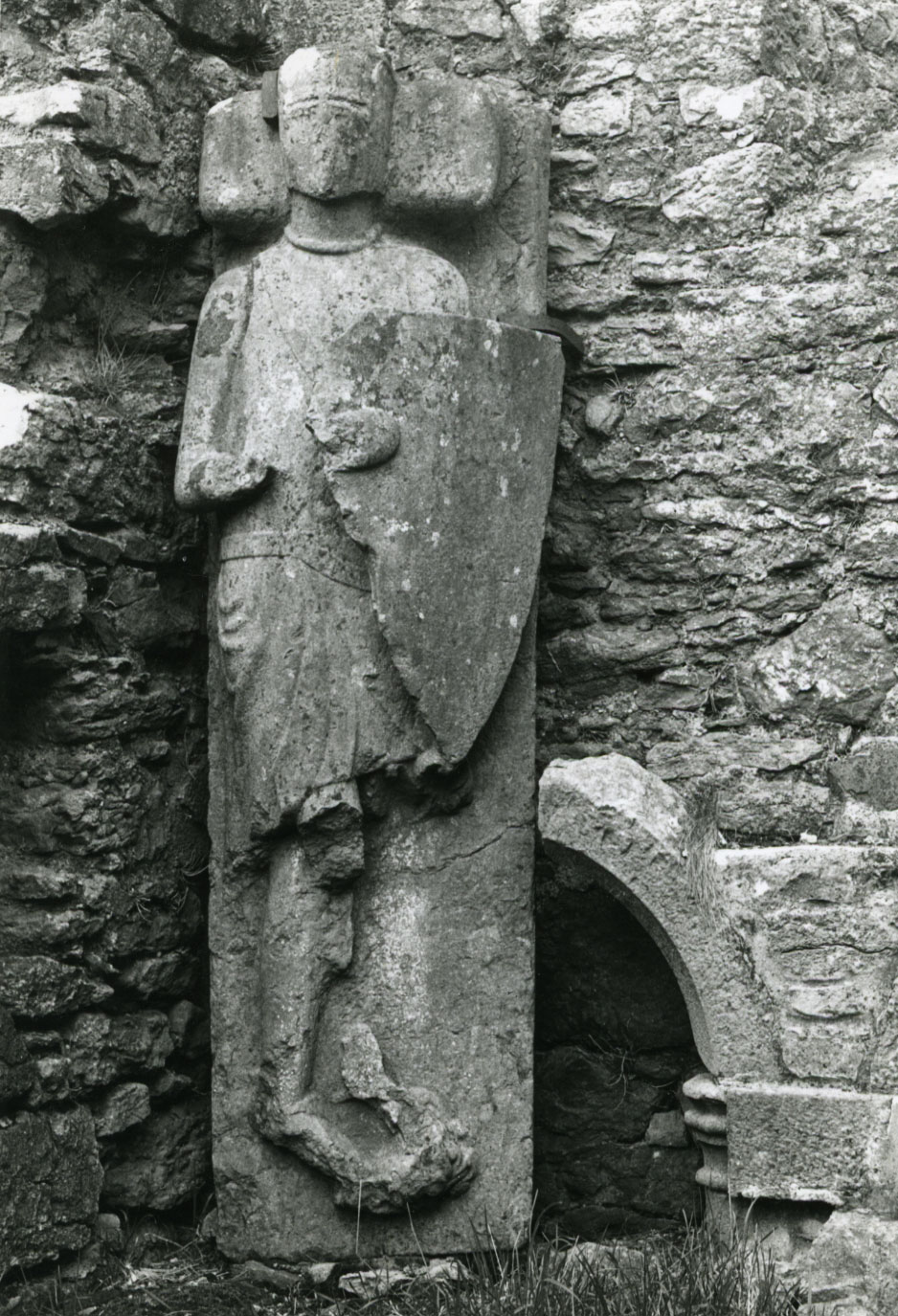
In the post I wondered was this effigy (pictured) - Geoffrey De Marsico as outlined in Morres's book (see pg 334 of the Google book version).
However the table tomb that the sketch shows no longer exists (and likely never did).

Manning in his piece in History Ireland states "A print of the effigy of a knight at Hospital, Co. Limerick, from Morres’s 1828 book. He added the fictitious tomb surrounds with the de Montmorency arms, and further embellished the print by adding an inscription to the base of the tomb surround."
https://www.historyireland.com/hervey-morres-and-the-montmorency-imposture/

Some reputable sources such as Hunt's Irish Medieval Sculpture Figures records the effigy as De Marisco and so does the Trinity website.
http://www.tara.tcd.ie/bitstream/handle/2262/38941/ertk2167.jpg?sequence=1&isAllowed=y

The SMR note on archaeology.ie also notes it as De Marisco.

However I personally would be thinking, based on the fraud / embellishment shown to date in my other posts in relation to sketches in this book, that this needs to be called into question.

https://www.facebook.com/Thetipperaryantiquarian/posts/pfbid02z9w8jAvBnPNECKC18NQprgTTXmQz7vFTyLMRUPXR7HLLegWqMGsMCRbXi4moL7Wpl

To follow the thread on Hervey Morres
https://www.facebook.com/Thetipperaryantiquarian/posts/pfbid024i1Jgv3bh3xwM8HcREVcPAtr8pgyUk8Bs5nh37FCTsz7gmUZGEUpM6rs4KZLY6rJl

So the big takeaway for me is to check your sources and try to go back to the primary source if possible.

It also shows that even supposed sketches of monuments drawn at a certain date aren't 

Is this an effigy of the man that built Nenagh Castle 800 years ago?
This effigy of a Knight is located in the Church of the Hospital of Any in Hospital Co. Limerick.
It is believed to be the figure of Geoffrey de Marisco, an Anglo-Norman knight who founded the Hospital in 1215.
Geoffrey seems to have connections to the Tipperary area in that possibly either himself, his father (or maybe a brother) was also known as Jordan de Marisco, who the town of Cloughjordan was called after (he owned a tower-house there).
It may have been his son William (or another Jordan) that married a daughter of the Lord of Latteragh as a William de Marisco is listed at the tower-house of Latteragh in 1254 (He was granted a weekly market here in 1254).
The surname De Marisco later became Morris, Morrissey or Fitzmaurice.
The connections are a bit sketchy as I've read other versions to the source above but it is fair to say that the De Marisco's / Morris family had strong connections with the Tipperary area.
This link here even suggests that he may been responsible for building Nenagh Castle?
https://irelandxo.com/ireland-xo/message-board/history

Update:
A History of Hospital and its Environs by Michael F. O'Sullivan seems to disagree with this idea (pg10), it states
"The Knight in the Corner
The effigy of a knight in armour of the period, in the north eastern corner of the abbey, is probably from the tomb of Roger Outlawe, Grand Prior from 1315 - 1340. Prior Outlawe was the first Grand Prior that we know to have been definitely born in Ireland. His family, one of recognised standing and wealth, had been established in Kilkenny for over 100 years before he was born.
Roger Outlawe was one of the most notable men of his day in Ireland and held many of the highest offices in the state. His services in the field against the forces of Edward Bruce were rewarded by crown grants and leases, and though much of his land was laid waste during the war, he successfull made good the damage."

Update:
The more up to date paper "The archaeology of the Irish Hospitaller preceptories of Mourneabbey and Hospital in context" by Eamonn Cotter featuring in the book Soldiers of Christ seems to confirm that the above effigy is Geoffrey de Marisco.
pg 119
"standing in the south-east corner, is of a knight and lady, dated by Hunt to the second half of the thirteenth century and said by him be 'the earliest double effigal tomb in Ireland, and perhaps earlier than any in England also'. The second effigy is of a single knight, dated by Hunt to 1260 and discussed elsewhere in this volume by Paul Caffrey. Hunt suggests it represents a member of the de Marisco family, one of whom - Geoffrey - founded this preceptory in 1215. A nineteeth - century genealogy of the de Marisco family shows an illustration of the effigy lying on a chest-tomb and specifically identifies it as representing Geoffrey de Marisco. Hunt cites another source, Memoirs of the family of Grace, as showing an illustration of the effigy on a tomb-chest, but concludes that the tomb-chest is 'probably imaginary'. Significantly, a photograph in Trinity College Dublin's online Edwin Rae collection shows the effigy lying in a niche in the north wall, near the north-eastern corner of the church, a common location for a founder's memorial. This may have been its original position and it is likely that it does indeed represent Geoffrey de Marisco, who died in France in 1245."

Caffery in "Visual culture of Hospitaller Knights of the Priory of Ireland" also in the same book above then states on pg 155
"There are the remains of three effigy tombs in the ruins of the church of the preceptory of Any dedicated to St John the Baptist at Hospital, Co. Limerick. The preceptory of Knockainy or Any was founded by Geoffrey de Marisco (d. 1245). in 1200 and the most intact effigy is traditionally associated with him. Plates of the ruins and the effigy were engraved to illustrate Hervey de Montmorency Morres' romantic Genealogical memoir of the family of Montmorency styled de Marisco or Morres (1817) complete with an elaborate tomb decorated with the Morres arms, consisting of a cross between four eagles (fig. 8.5)."


The confusion in O'Sullivans book may be as a result of the following

pg 157
"One of the other tombs may have been sculpted for Roger Outlaw (d. 1341), prior of Kilmainham (1317-41) who died at the hospital at Any and was buried there. There is also a large double effigy tomb depicting a knight and his dame."

So it is likely then that there is an effigy of Geoffry de Marisco and also of Roger Outlaw. 

1766 Census for Abington

1766 Census for Abington, Co. Limerick.xlsx